
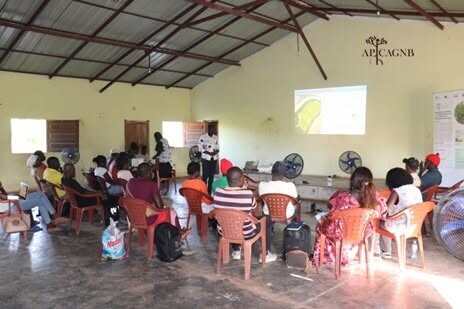
On 19 and 20 November, the APICA-GNB Project organised a two-day training session for 34 extension workers to strengthen their capacity to establish and support Community Mangrove Protection Brigades in 34 beneficiary communities across the Cacheu and Oio regions.
The training was conducted by the APICA-GNB Project team, in collaboration with its technical partner, the Institute for Biodiversity and Protected Areas (IBAP). It aimed to equip extension workers with the technical knowledge and practical skills needed to raise awareness, mobilise communities and promote the conservation and sustainable management of mangrove ecosystems.
The sessions covered several key topics, including the ecological, economic and social importance of mangroves, the main threats contributing to their degradation, community-based surveillance and monitoring techniques, mangrove restoration and replanting methods, and mechanisms for reporting activities and situations that threaten these ecosystems.
The training also addressed the project's grievance mechanism and highlighted gender equality as an important factor in promoting climate-resilient agriculture among project beneficiaries.
Through this initiative, the APICA-GNB Project seeks to strengthen the role of extension workers as facilitators of environmental protection and as a link between the project and local communities. The initiative will support the establishment of active Community Mangrove Protection Brigades, encouraging local participation and collective responsibility in safeguarding mangrove ecosystems for present and future generations.