Cashew Plantations and Cashew Processing Centre

Understanding the environmental changes and how to adapt plays a crucial role for small-scale farmers to secure the cash crop, one of the most important is the Cashew nuts.

The idea behind the Cashew Processing is to develop local capacities in key areas of sustainable cashew production.

Cashew has a nut and an apple.

The apples are often used locally in making juice and jam.

The nuts are often sold raw through middlemen, which limits the farmer’s income, and a few are processed and sold on the local market.

In 1987, ADPP-GB decided to move to the Oio Region and established a commercial cashew plantation. In this connection, 900 farmers were trained, and it has positively impacted the production of Cashew in Guinea-Bissau.
conomy Economy and Entrepreneurship CASHEW PLANTATIONS AND CASHEW PROCESSING CENTRE

In 2016, with the support of the European Union, a small processing centre was established to support the farmers in increasing the price of the nuts exported as processed nuts.

ACACB was established (Associação de Clubes de Agricultores Comerciais de Bissorã), which owns and runs the processing centre.

In 2025, ADPP-GB employed 4 people in the plantations to monitor the maintenance of the plantations and the harvests.

The plantations were hired out to 148 local farmers to make the collection of the nuts.

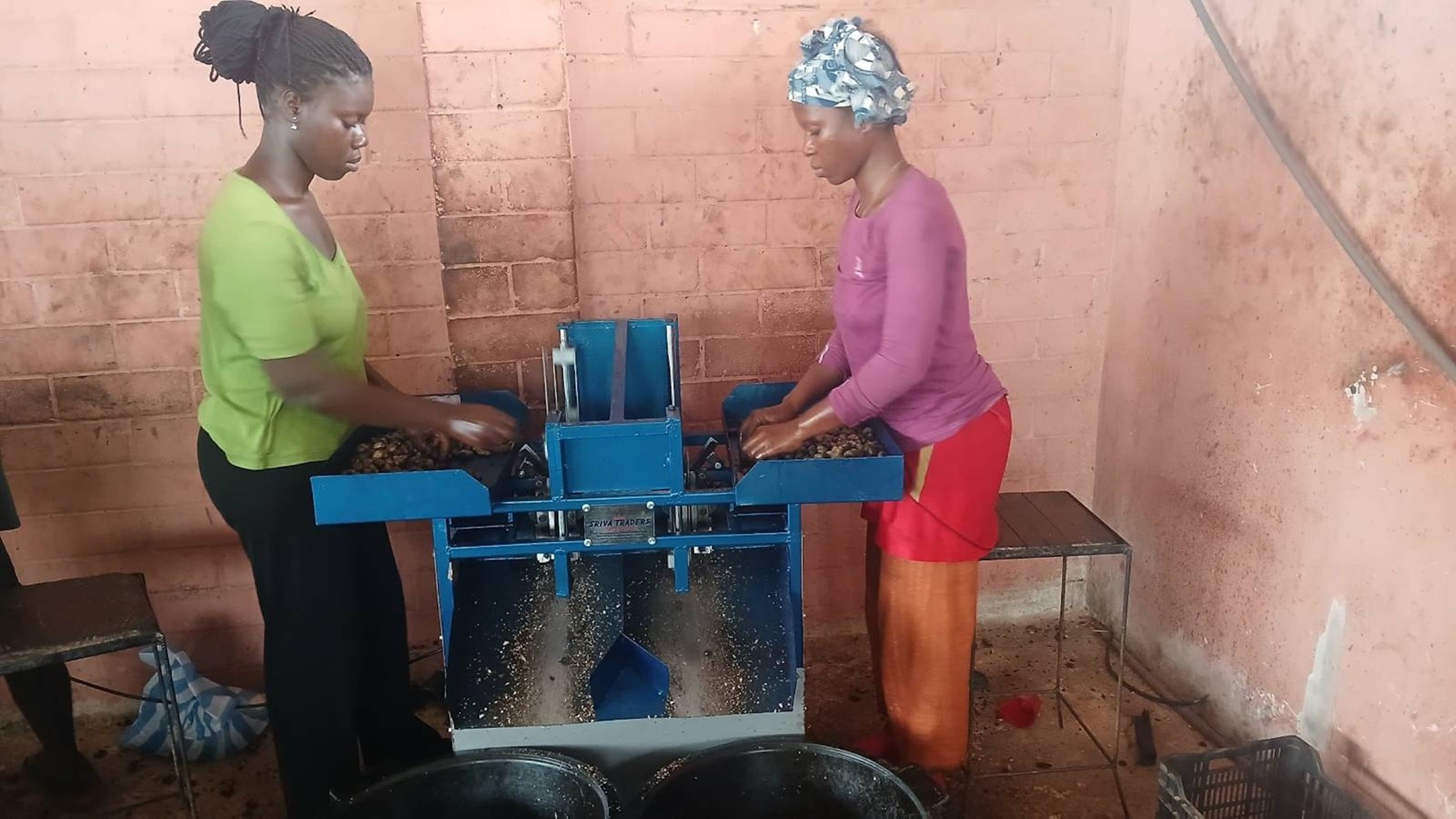
For each kilo of clean nuts produced, four kilos of raw nuts are needed.

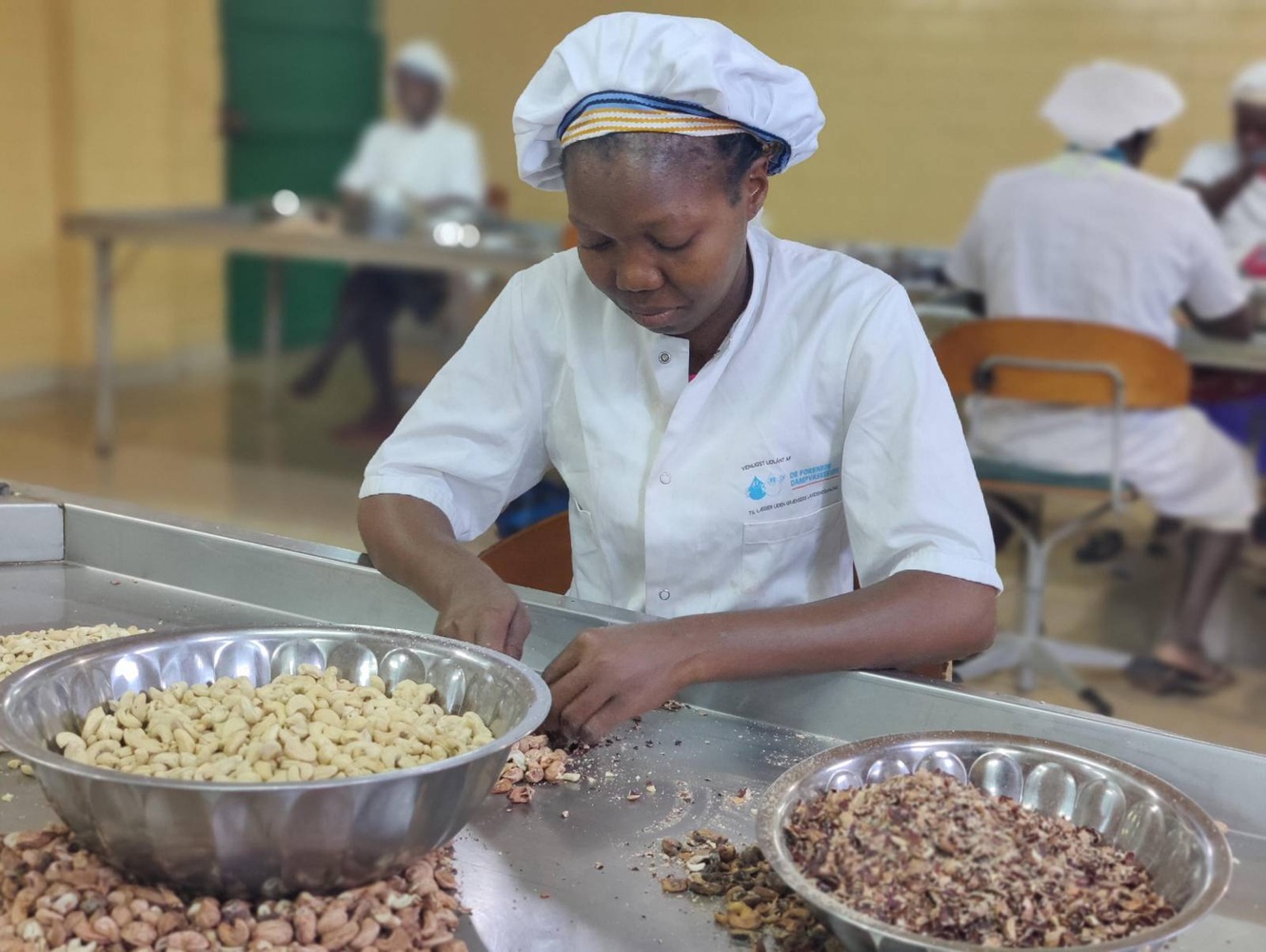
The process of getting the raw nuts is as follows:

  • Remove the nut from the apple.
  • Nuts are dried.
  • Nuts are cooked and dried again.
  • Nuts are cut open and removed from their shells.
  • The clean nuts without the shells are dried for hours, and after that, peeled.
  • Finally, the nuts are sorted into categories, packed and made ready for sale.
Economy and Entrepreneurship CASHEW PLANTATIONS AND CASHEW PROCESSING CENTRE

In 2025, 57 women and 48 men were employed in the processing centre, and 4 containers were exported to German company Naturkost Ernest Weber, which buys the biggest nuts.

40% of the nuts are sold on the local market.

In 2025, 157 tons of nuts came to the factory from the ADPP-GB plantation.

Supported by:

Humana People to People partners
ADPP-GB Fundraising

Fundraising and global reuse are the circular textile economy in action

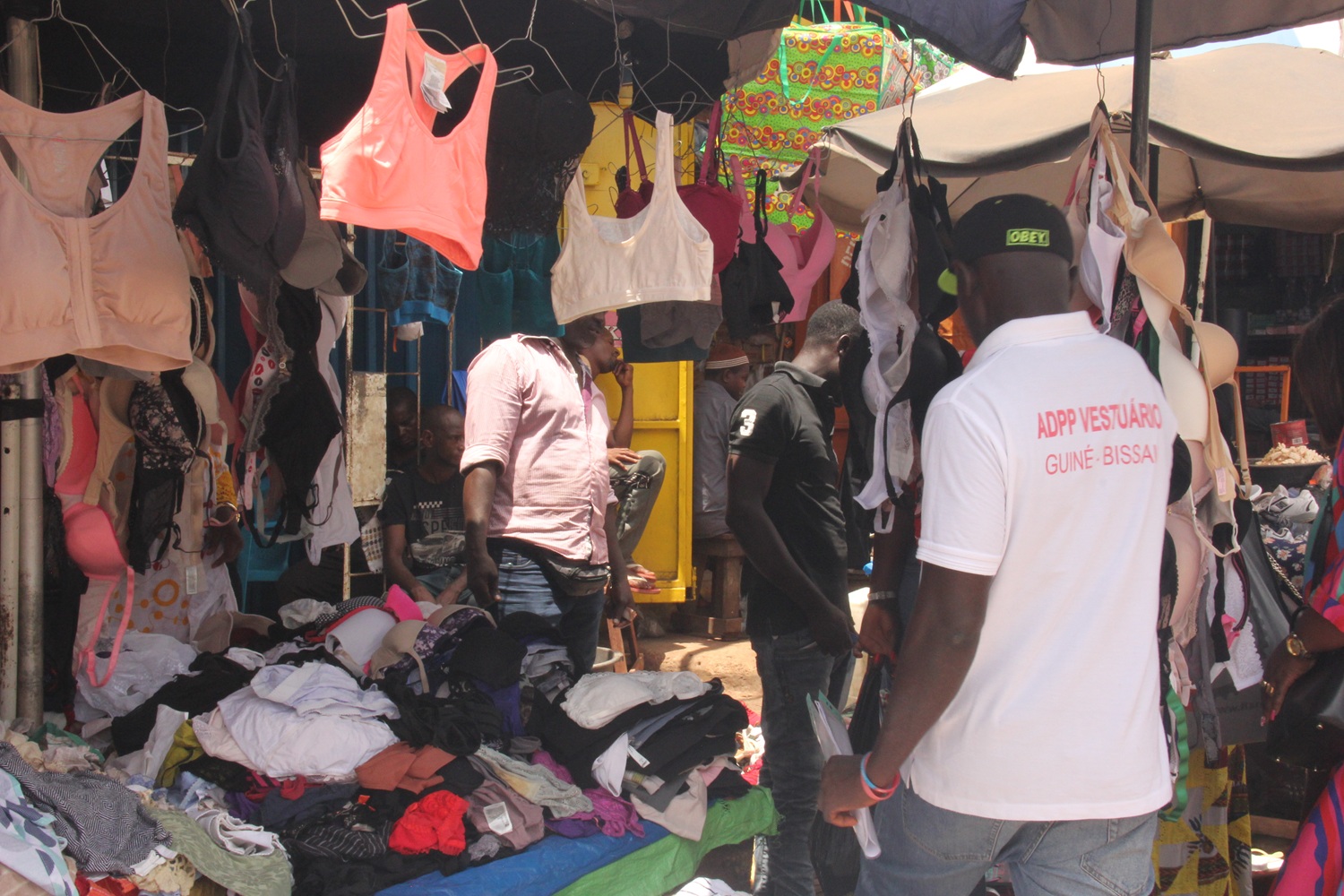
In sub-Saharan Africa, an estimated 80% of the population relies, partly or entirely, on second-hand clothing to meet their basic needs. On average, a Guinean citizen buys 6 items in a year.

The sale of 2nd hand clothes gives access to affordable, good-quality clothing to most of the population.

It helps save money for other family needs, such as housing, food, health and education.

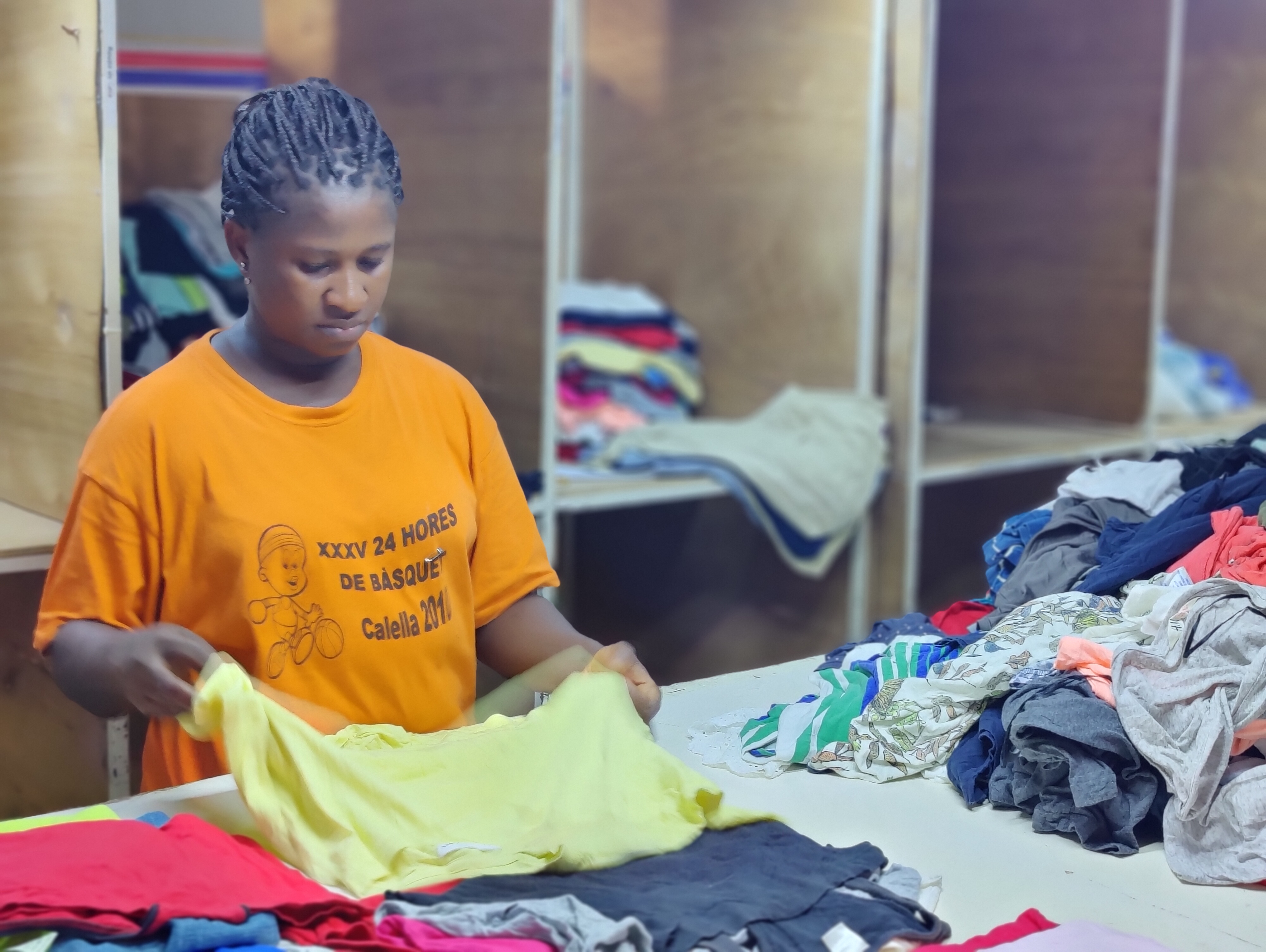
Vestuario Angariacao de fundo 2025 1

ADPP-GB started Fundraising through 2nd hand clothes and shoes in 1988 for emergencies and some sales to generate a small income for project implementation.

This small funding has enabled ADPP-GB to apply for more funding from the National as well as International Partners for Education, Agriculture, Health and Community Development, supporting the people of Guinea-Bissau.

In 2020, ADPP-GB started to sort the clothes into categories, which allows the 1.446 costumers to buy their wished categories of 12kg, 15kg, 22,5kg or 45kg.

Vestuario Angariacao de fundo 2025 2

In 2025, the Fundraising Clothes & Shoes has worked with the sorting quality and mobilised costumers to buy different categories.

In 2025, 39 people are employed in the four outlets, sorting centre, sales and administration. 

The Fundraising Clothes & Shoes operates according to the General Agreement with the Government of Guinea-Bissau. 


531

Tons were sold

482

Tons were sorted into small bales

Support Project for the Empowerment and Financial Inclusion of Women and Youth in the Cashew, Fruit, and Vegetable Sector (PAIFJ)

A big share of employment in Guinea-Bissau is informal, and people need to be highly entrepreneurial. That is why ADPP Vocational School Bissorã includes entrepreneurial training and support to the students with start-up kits in its proposal to partners.

ADPP-GB supports groups and individuals in acquiring the understanding and skills needed to develop a successful business.

Economy and Entrepreneurship PAIJF project

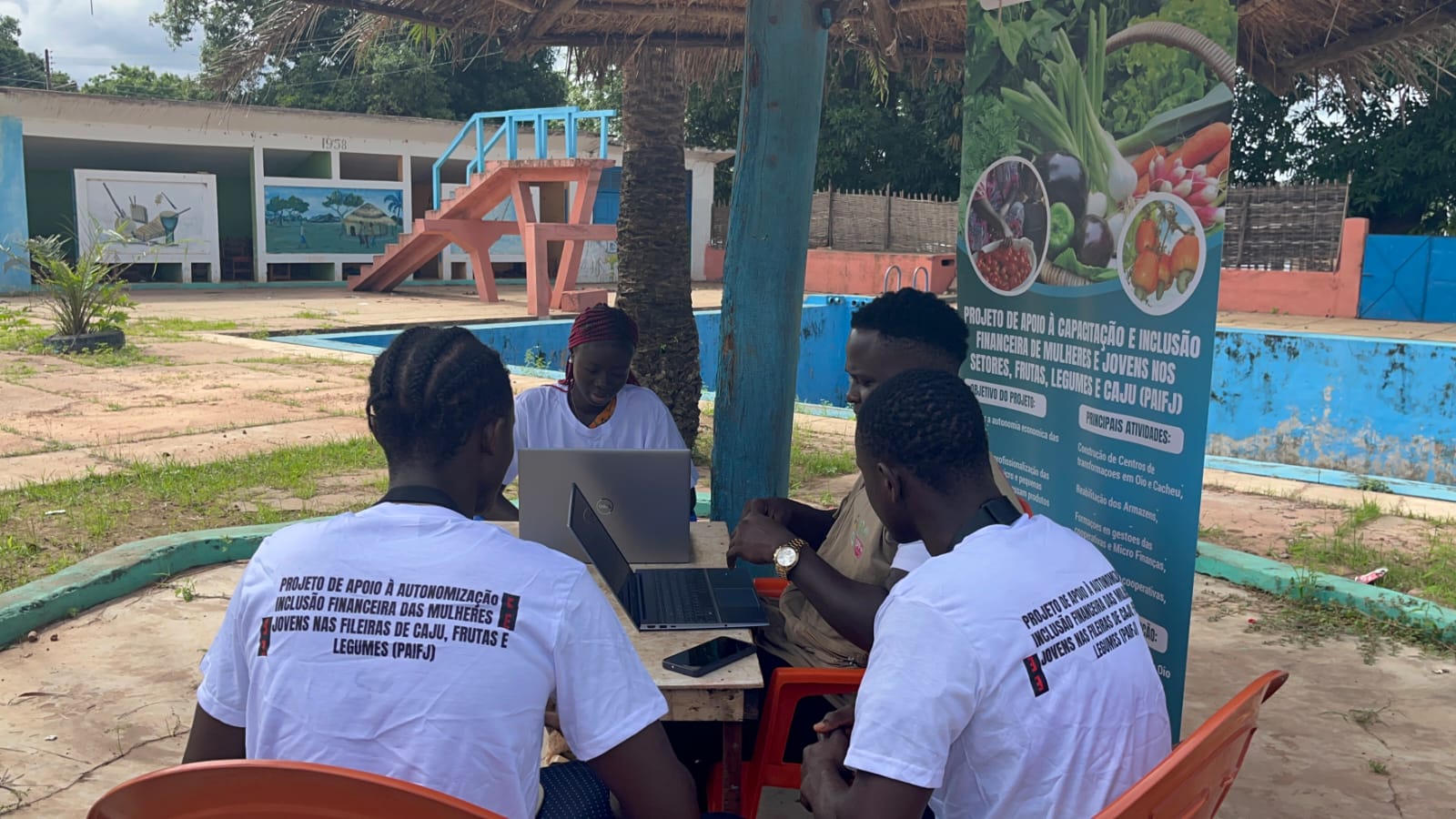
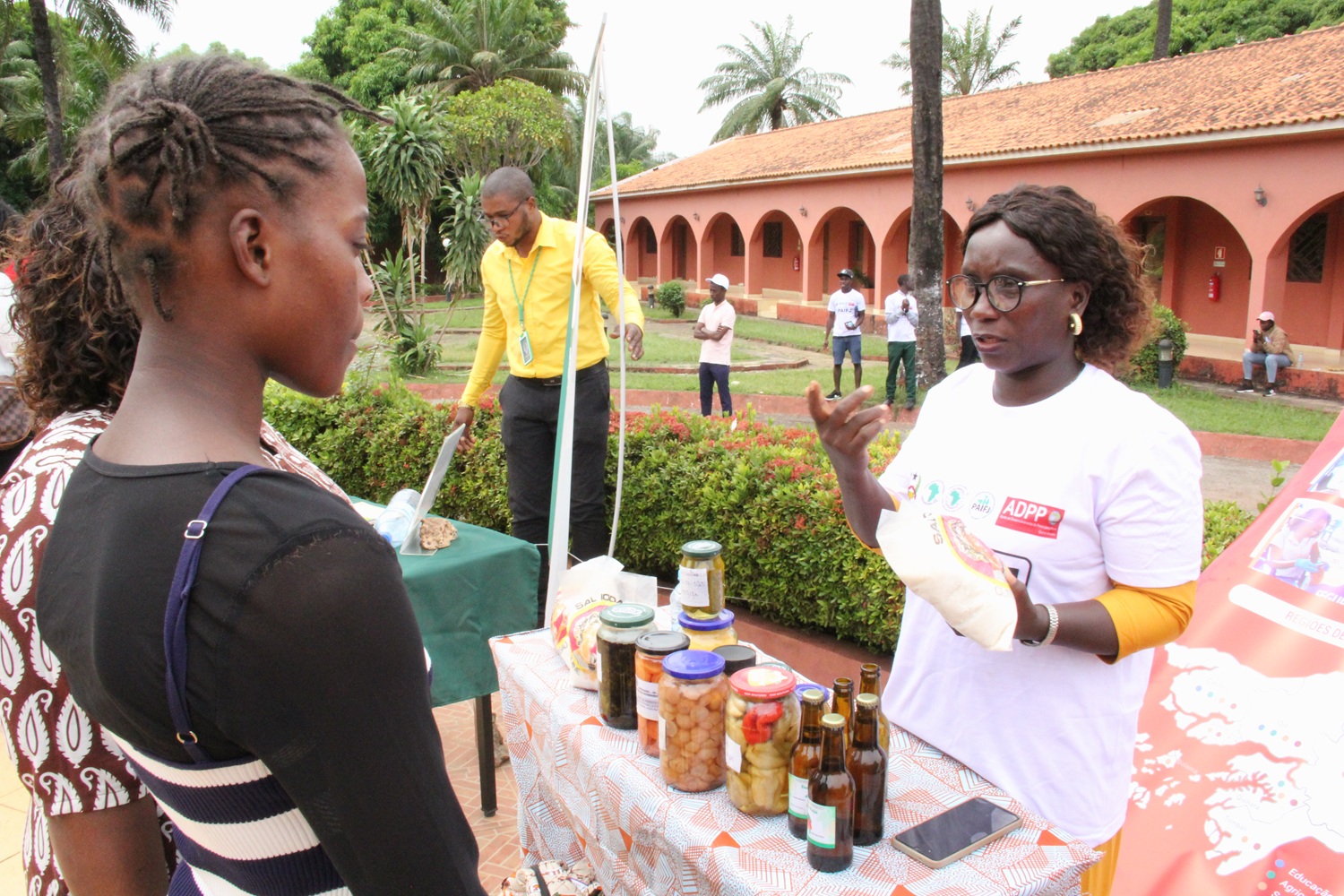
Poverty reduction for women supported by the African Development Bank (PAIFJ), with a greater focus on entrepreneurship and the agribusiness component, has been part of our training programs. The 35 students and 25 cooperatives learned how to make good plans, calculations and production for micro-projects.

Economy and Entrepreneurship PAIJF project

The Entrepreneurship team continues to build the capacity of three rice cultivation producers of Cufeu, Djinicom and Udjequi. Furthermore, eight communities were formalised. Eight nutrition and food hygiene awareness-raising sessions were held on how to feed children with local products and maintain good hygiene.

 Within the PAIJF project, ADPP-GB partnered with the For Women By Women Foundation, promoting female empowerment and youth employability. In Bissorã, around 150 participants engaged in discussions on emotional health and gender equality, while the 3rd Job Fair provided 400 young people with career guidance and skills development. These activities strengthened leadership, autonomy, and social inclusion in the communities. 

235 trained

Supported by: 

African Development Bank, For Women By Women Foundation and Humana People to People Partners